
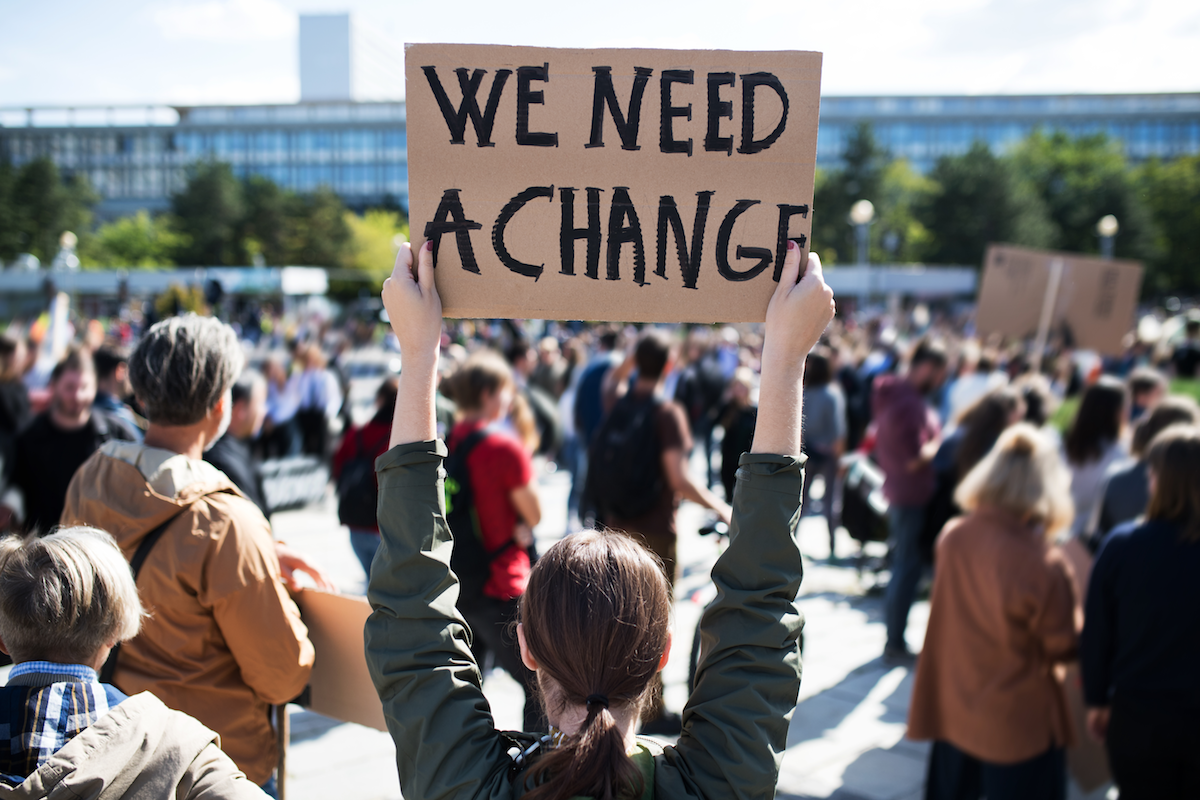
Are Protests Effective?
Protests are an American tradition. The history of the United States is deeply intertwined with protests, dating back to before its founding.
A number of people in our small town of Galena joined the nationwide “Good Trouble” protests. These were inspired by John Lewis, a congressman and civil rights leader, who advocated for “good trouble” as a means of fighting injustice. The protest sought to raise awareness and challenge some Trump administration policies that are seen as harmful to civil rights and liberties. These protests took place on July 17th, the fifth anniversary of Lewis’s death.
Anyone who drove by the protestors became aware of some unrest. The signs called attention to various issues that were important to each individual. Things that get under one person’s skin may not be a top irritant to another protester; therefore, multiple signs exist that highlight various issues of injustice.
My question is, are protests simply a symbolic statement of dissatisfaction, or do they accomplish anything?
A protest is a political tactic. Political tactics are methods and actions used to gain and exert political influence or power and to achieve specific political goals. Examples include door knocking, posting on social media, and waving a flag. Oftentimes, tactics include contacting political representatives through phone calls, postcards, and emails.
Whether it is political or personal, we all do it. We want to influence others to be more like us. Outside of the political arena, we may take actions to gain awareness and influence others to our preferred way of thinking through T-shirt slogans, jewelry (wearing a cross, for example), and bumper stickers. These are declarations of what we value and a wish to influence others to hold similar values.
Determining whether protests are effective is dependent upon certain factors. While there’s no single “yes” or “no” answer, research and historical evidence suggest that demonstrations can be very effective under certain conditions. Protests can raise awareness, shift public attitudes, and bring neglected issues to the forefront. Unity of like-minded people provides a sense of empowerment when a single voice seems powerless or unheard. Knowing you’re not alone in your beliefs or struggles can combat feelings of isolation and hopelessness. Essentially, unity transforms individual frustration into collective power. Policy change is often slow.
Protests may be less effective when they lack clear objectives. Vague demands or a lack of unified goals can hinder a movement’s ability to achieve concrete outcomes. To be effective in your protest, ask yourself what you are protesting, why you are protesting, and clarify your desired outcome by naming the because.
I am drawing on examples here that are not necessarily true of my behaviors, but which serve as general examples.
- (What) I joined a march to advocate for civil rights and liberties. (Why) to draw attention to this issue, engage, and energize people (Because) I want to safeguard due process and voting rights.
- (What) I plant pollinator plants (Why) to attract pollinators (Because) their habitat is disappearing.
- (What) I use reusable diapers for my baby (Why) to keep them out of landfills (Because) I want to contribute to a healthier environment.
- (What) I vote (Why) to ensure the people’s voice guides our government and policy (Because) all are equal, and our collective voice is essential to protect the freedoms upon which this country was built.
- (What) I drive an electric car (Why) to reduce our dependence on petroleum (Because) I firmly believe this resource is unsustainable; it increases pollution and damages air quality.
Once you have a clearly defined objective, you can apply principles of quality improvement, such as the Plan-Do-Check-Act (PDCA) cycle: Have a plan, execute the action, assess its effectiveness, and make course corrections as needed.
Broad, systemic change happens in communities. Your political views are more than just opinions; they reflect your values, your worldview, where you place your empathy, and how you perceive humanity. Democracy thrives on open dialogue, even and especially with those who don’t share your exact worldview or beliefs.
I leave you with two questions and one challenge:
Question: What does your behavior reflect about your values and concerns?
Question: What is important enough to you that you would attempt to influence others?
Challenge: I challenge you to talk with others across political divides, with the hope that you might join forces to create positive change. A good rule of thumb for these conversations is to listen 70% of the time and speak 30% of the time.
Perhaps I’ll see you at your protest. Stay safe.