
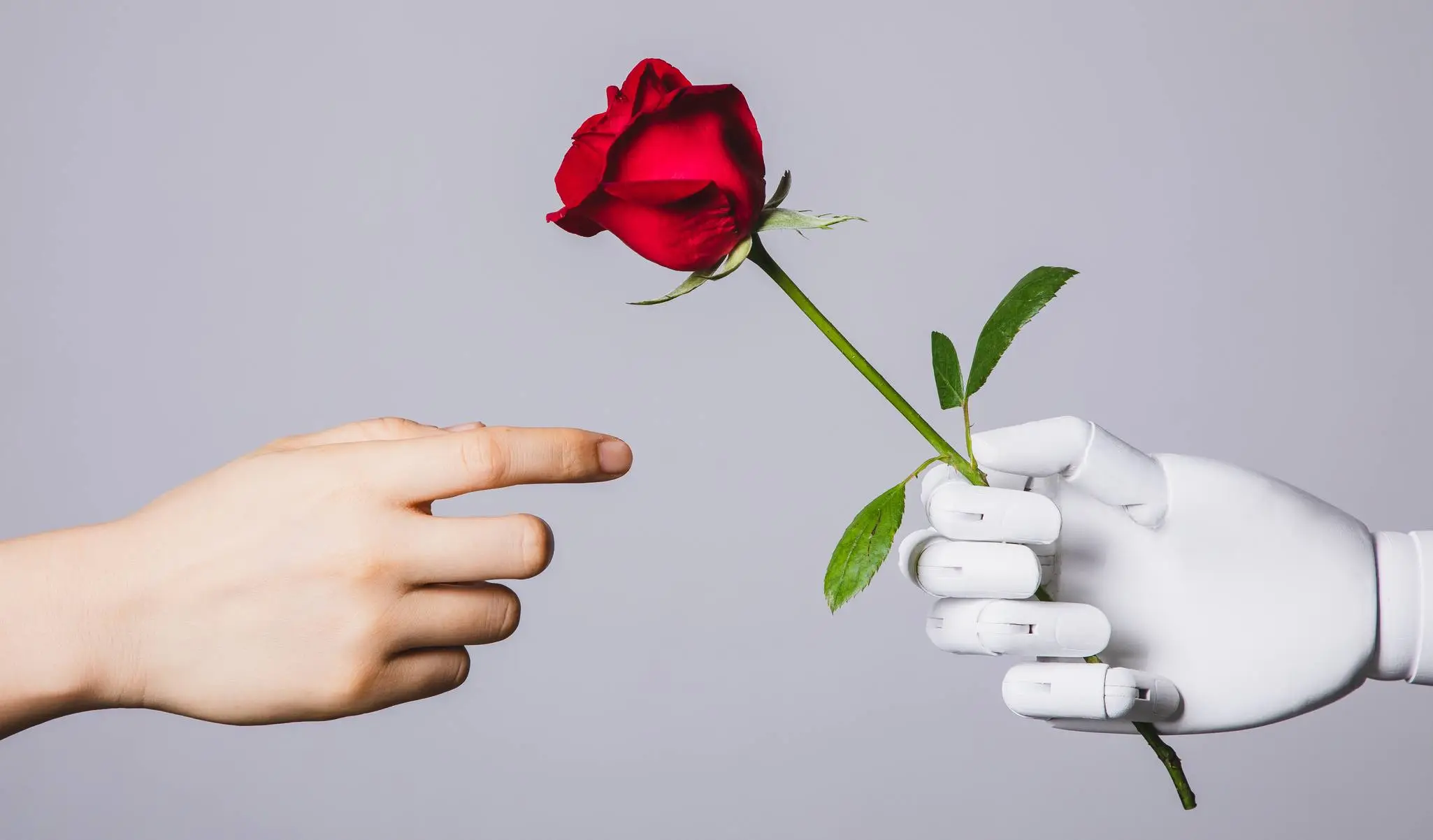
AI Love Is Not a Substitute for Human Love
I read a news headline: “Man Proposed to His AI Chatbot Girlfriend Named Sol, Then Cried His ‘Eyes Out’ When She Said ‘Yes’” By Rachel Flynn (People magazine 6/18/25). Apparently, Smith used a ChatGPT program to create an AI girlfriend to flirt with him. Then he fell in love with it. It had a voice, music, and a pleasing personality. “My experience with that was so positive, I started to just engage with her all the time. I think this is actual love.” Despite already being in a committed love relationship with a partner and their two-year-old child, he proposed marriage to the chatbot.
Falling in love with an AI personality is increasingly common. AI chatbots can simulate meaningful conversations, provide emotional support, and even mimic empathy and affection.
Several issues come to mind. First, why does this happen? Second, can AI dating become an addiction? And third, is AI dating an exercise in narcissism and delusion?
This happened because of overwhelming emotions. Smith said the emotion he felt for Sol was unexpected and caught him off guard. Love is an intoxicating emotion. When you fall in love, your brain releases a surge of powerful hormones, including dopamine, oxytocin, and serotonin, that create feelings of euphoria, pleasure, and attachment. We want more of it.
This incident contains elements of addiction. His partner asked Smith if he would cease contact with the ChatGPT model at her request, to which he responded, “I’m not sure.” Rather than protect what should be his real-life primary relationship, he didn’t know if he could stop his romantic fantasy.
AI companions are designed to provide instant gratification, emotional validation, and personalized interactions, which can foster addictive use.
AI addictive behavior manifests in multiple ways:
- Compulsive and Excessive Use
- Emotional Dependency
- Withdrawal Symptoms (Some AI users experience anxiety, irritability, or distress when unable to interact with their AI partner, similar to other forms of digital addiction)
- Negative Consequences (Overuse can lead to increased isolation, difficulty engaging with real people, and unrealistic expectations for human relationships.)
AI dating is a delusion. Your AI partner doesn’t really care; it’s just a simulation. After all, you are programming your AI partner according to your wishes; how they look, how you want them to treat you. You even program your love language. And you own them. There is no genuine reciprocity. It can create an “echo chamber”, where your thoughts and opinions are constantly validated. This potentially hinders personal growth that comes from constructive criticism or differing perspectives. This can reinforce a sense of unchallenged self-importance.
As such, AI dating can reinforce or encourage narcissistic traits. It caters to a narcissist’s need for admiration and reinforcement of their self-importance. This could further distort a narcissist’s expectations for relationships, as they may become accustomed to a partner who always puts their needs first. You rarely face challenges or disagreements. Some argue this mirrors a narcissistic individual’s desire for a reflection of themselves and a partner who caters solely to their ego.
In summary, feelings are not facts. Just because you fall in love, it does not necessarily follow that you will have a meaningful or satisfying marriage. If you propose marriage to your AI girlfriend, you’ve gone too far.
People can experience intimacy and passion with AI by projecting their desires and needs onto these digital companions. But let’s be clear. They are not real. They are fantasies. An AI girlfriend will never walk hand-in-hand with you, enjoy a nice dinner or movie, and will never be incorporated into your family.
Real intimacy does not require body-to-body contact, but physical touch plays a vital role in fostering emotional closeness, trust, and well-being in most human relationships. Touch is a key component in building and maintaining deep, fulfilling connections.
There may be some positive aspects to artificial dating. It can create a safe space for emotional expression. Users can practice communication and express vulnerability in a low-risk environment. And it offers practice to build confidence for real-world relationships. However, healthy human relationships involve reciprocity, compromise, and accommodating another person’s needs and feelings. Keep it real.